
About the author

Daria Grozdek
Business Analyst
The Business Analysis Body of Knowledge, commonly known as BABOK, gives us the following definition of business analysis:
Business analysis is the practice of enabling change in an enterprise by defining needs and recommending solutions that deliver value to stakeholders.
Business Analysis Body of Knowledge
But what kind of value does Business Analysis bring?
The list of benefits that a practice of business analysis brings to the project is quite extensive and cannot always be connected to a metric.
For example, developers’ satisfaction with well-written, clear requirements can hardly be expressed with a number. Words would be a far better choice instead.
In this article, we focus on the business analysis benefits that we measure, or, more accurately, those that have proven statistical value. We will also explain how these benefits directly affect the project’s cost, saving it from additional rework.
To analyse this further, we will focus on key activities of business analysis:
-
- Eliciting, analysing, and documenting requirements
- Process enhancement and modelling
- Enabling and facilitating change
- Support decision makers in making informed decisions
- Implementing feedback into requirements
Let’s dive deeper into each one and see how they impact the project’s quality
1. Eliciting, analysing, and documenting requirements
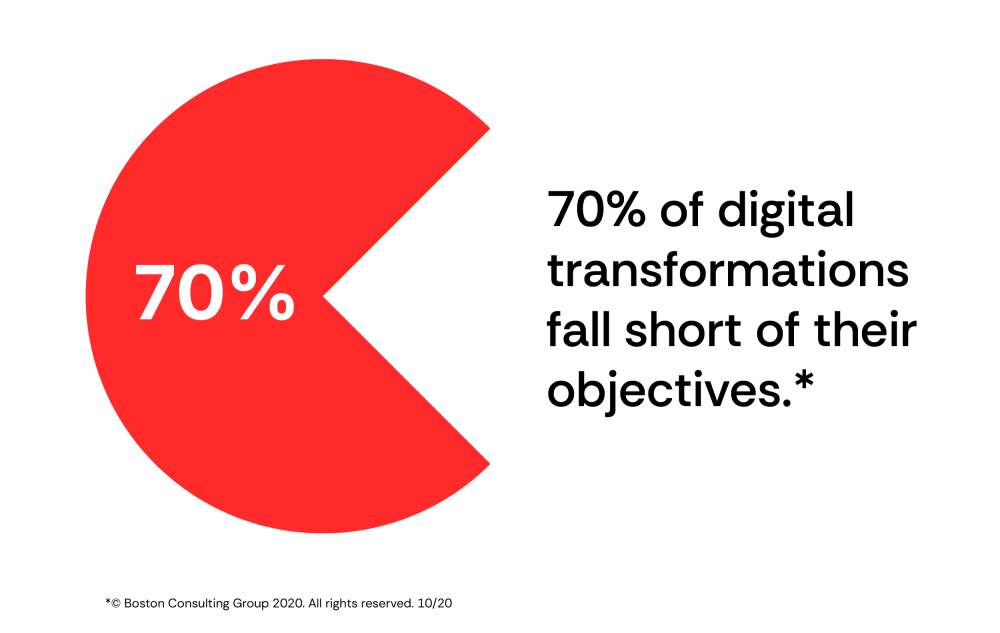
A study by BCG (Boston Consulting Group) on the success of digital transformations revealed that 70% of these initiatives fail to meet their objectives. Many of them create limited value and produce no sustainable change.
Eliciting requirements
Eliciting requirements from the actual stakeholders is the foundation for understanding what the business needs and why. It is impossible to analyze without having the right information, and that information is often the outcome of elicitation. Business analysts ask well-structured, thought-provoking questions to the right people, ensuring they gather valuable and reliable information.
Skipping or rushing this process can result in a lack of clarity in:
- Actual needs and desires of users and stakeholders
- Success metrics
- Existing constraints or dependencies
All of these factors directly affect the project’s cost. Misaligned features, misunderstood objectives, and stakeholder dissatisfaction lead to rework and re-scoping, which can increase development costs multiple times.
Analysing and documenting requirements
Analysing requirements involves prioritizing, organizing, and resolving conflicts identified in the gathered information. The outcome of the analysis process is clear requirements that bring value to stakeholders and align with business goals.
Having a dedicated analyst onboard reduces the chance of ending up with vague requirements, missing important use cases, and misunderstanding key aspects of the system. That way, you invest time and money in solving the right problem effectively.
By creating detailed documentation, a business analyst makes sure that:
-
- Everyone from team members to stakeholders has a shared understanding of the project’s features, goals, and scope
- Developers don’t rely on assumptions but on well-defined specifications
- Testers can test against a clear, definitive source of truth
- Requirements are easy to track and update
- Easier analysis for future enhancements or upgrades
Investing time and resources in effectively eliciting, analyzing, and documenting requirements is crucial for controlling development costs and ensuring alignment with project goals.
When you accurately capture and implement requirements, the final product is more likely to meet stakeholder expectations, resulting in higher satisfaction and a reduced likelihood of costly post-implementation changes.
2. Process enhancement and modelling
Process enhancement and modeling are so much more than just drawing diagrams. Through them, we understand how work gets done, identify inefficiencies and pain points, and design improved workflows that software can support effectively. Done right, they create a leaner, smarter foundation for development and ensure improvements with measurable value.
According to the previously mentioned BCG report, more than half of the companies that went through digital transformation suffer because they didn’t invest enough effort in creating flexible digital platforms. On the other hand, two-thirds of the companies that succeeded built modular platforms based on business needs, not IT preferences.
Now let’s see how a business analyst can help with that.
-
- Business analysts collect and analyze all relevant information, ensuring that the system’s architecture is tailored to meet the business needs, not the other way around.
- Assessing all possible options and recommending the best solutions, they ensure alignment around project values and maximise the project outcome.
- They provide key information for establishing success metrics. For example, the number of steps needed to finish a process in the AS-IS and TO-BE states of the system, assuring maximum optimisation.
- Facilitating project and stakeholder management by providing comprehensive and detailed process visualisation, ensuring “everyone is on the same page” when talking about the solution.
- By doing all of the above, they ensure alignment with the project vision.
Skipping all of that might lead to a system that nobody wants, one full of fancy tools which don’t support the business, or even worse, a system which is, from a user and business perspective, worse than the previous one. An actual project failure!
3. Enabling and facilitating change
The BABOK guide defines change as the act of transformation in response to a need. In today’s world, change is constant, and businesses must be able to adapt to new circumstances quickly and effectively. In other words, they need to be agile.
The BCG research showed that over two-thirds of successful transformations had agile governance. 90% of the failed ones did not. It also stated that 26% of digital transformation projects created less than 50% of the targeted value and resulted in no sustainable change, concluding that the human side of transformation is more often the deciding factor than the technology itself.

New solutions frequently change the way people work. As a result, people tend to approach them with resistance. A business analyst’s job is to enable smooth transitions and prepare the organization to adopt new solutions successfully.
Their work includes:
-
- Supporting stakeholder readiness for new processes or tools
- Incorporating and nurturing an agile mindset inside the organization
- Identifying and addressing resistance to change and assisting in overcoming it
- Educating the users and training them on how to use the new systems
Additionally, business analysts often serve as a bridge between strategy and operations, ensuring that everyone at the company level truly understands the reasons and purpose behind the change.
So, how does this affect the project’s costs?
Adoption of new solutions is a part of the project. If users don’t use the solution as intended, it requires additional funding for training and support, and often results in additional and expensive rework.
But if you invest in change facilitation early, you protect the time and money invested in the solution and ensure that users use all implemented features effectively.
4. Support decision makers in making informed decisions
Making a decision that affects the product, project, or business strategy can be very risky. In order to reduce this risk, decision makers should gain as much relevant information as they can so that the decision is made with greater certainty of success. Collecting that kind of information demands time and dedication, and having a person specialized for that task can be of great help. Because of their ability to collect data, assess its true value, and structure it understandably, business analysts can be a great support to decision makers.
This BA responsibility includes:
-
- Collecting and analysing relevant information, like market research, stakeholder feedback, technical information, etc.
- Presenting clear, objective insights based on data, requirements, and business context
- Helping stakeholders understand the risks and impacts of different choices
- Ensuring decisions align with business goals
- Investigating the best solution options with the technical team
The BCG report strongly reinforces the idea that informed, aligned, and timely decisions are critical for successful digital transformation. Fulfilling that task successfully ensures:
-
- Clear priorities, which result in the efficient allocation of resources
- Discussing risks and trade-offs before they become expensive (for example, fixing bugs in production can be over 100% more expensive than in the development phase)
- Technical and business decisions stay in sync
5. Implementing feedback into requirements
“A key aspect of the agile mindset is continuous improvement. Business analysis practitioners seek to continually improve the solution as well as the processes used to deliver the solution. Continuous structured and unstructured feedback allows business analysis practitioners to adapt the solution and its processes in order to increase the value being delivered.” Agile Extension to the BABOK Guide
Implementing stakeholder feedback into requirements is critical in agile environments, as we regularly demonstrate the system to stakeholders and gather their feedback. However, we cannot ignore it in waterfall or hybrid projects either, where we make adjustments based on prototyping, UAT, or stakeholder reviews. Without taking feedback into account, the system would eventually become stale, outdated, and wouldn’t fit the user’s needs.
A business analyst’s task is to ensure that feedback is regularly collected from stakeholders (users, project owners, developers, testers, etc.) and evaluated. They are constantly checking if the solution features are evolving in line with business needs and if the value of the solution is approaching its maximum. Based on these insights, they add new information to the existing requirements.
Skipping this process would result in expensive rework and general user dissatisfaction with the system. Business analysts ensure that feedback is heard, understood, and translated into actionable updates, thereby preventing scope creep and wasting money on features that don’t bring real value.
Too often, projects fail not because of poor code, but because of resistance to change, misinterpreted needs, or inadequate user involvement. Business analysts help in solving these issues before they become expensive problems.
In the world of custom software development, where every hour, feature, and sprint counts, business analysis isn’t a luxury. It is a smart investment.
If you’re looking to maximize your investment, consider consulting with us for expert guidance from business analysts.


