
About the author

Daria Grozdek
Business Analyst
Have you ever had that feeling that you’re stuck in a problem that you cannot solve? Or that you have a vision of a solution, but have absolutely no idea how to get there? Requirements consulting could be the solution to all your challenges.
Requirements consulting definition
Requirements consulting is our service for empowering your team with the expertise, frameworks, and knowledge needed to define, manage, and optimize requirements independently.
Instead of doing the work for you, we act as your strategic guide— kind of like a teacher who shows you how to solve the problem rather than just giving you the answer.
Through targeted training, hands-on coaching, and proven methodologies, we equip your organization with the tools to elicit and manage clear, actionable, and measurable requirements that align with your business goals. The result is stronger collaboration between teams and stakeholders, reduced project risks, and the internal capability to manage requirements effectively long after our engagement ends.
Who is the ideal requirements consultant?
In the context of managing requirements on an IT project that is the perfect base for including a guide who can help you in finding the best possible solution to overcome those challenges. But who is that person?
It should be someone who:
- Has a deep understanding of both business and technology
- Is experienced in gathering and analyzing requirements
- Has expertise in various business domains
- Possesses wide knowledge of various methodologies and techniques
- Has excellent communication and teaching skills
That mysterious stranger is called a requirements consultant and can be a savior for your project or even business. This is especially true if you are dealing with challenges on a strategic level.
A requirements consultant helps teams and organizations adopt best practices for defining, managing, and optimizing requirements. Requirements consultants acheive this by providing expertise, frameworks, and training.
But keep in mind that the requirements consultant isn’t the one who “does the work.” Instead, they train and educate others on how to do it. By doing so, they leave a strong and long-lasting mark – kind of like a teacher who shows students how to solve a math problem instead of just giving them the answer.
So, now that we understand their role and mission, lets summarize the highlights of the requirements consultant’s work by:
- Educating teams and organizations on how to elicit and define clear, actionable, and measurable requirements they reduce misunderstandings and misalignment with business goals
- Implementing good requirements documenting and tracking practices they enhance collaboration between teams and stakeholders and ensure that everyone is familiar with the status and progress of the solution
- Doing all of the above a requirement consultant equips teams and organizations with the tools, methodologies, and knowledge to independently manage requirements for future projects
When should you consider requirements consulting?
When exactly you should bring in a requirements consultant depends on the methodology you use and the project’s needs.
Using the waterfall approach, requirements consulting typically happens in the analysis phase of the project, before development starts.
And when using an agile approach it can happen at any time, as the analysis happens continuously throughout the project.
How long does requirements consulting take?
The list of the factors affecting the duration of the consulting process is quite long. Just some of them are the complexity of the project, your team’s level of expertise, the challenges they’re facing, the size of the team etc. Because of this, there is no strict duration; consulting can take from a couple of days to a couple of months (or even years if you are dealing with one hell of a project 🙂).
Based on the most common situations when requirements consulting is needed, we can divide them into 3 time-based categories:
1. Short-term engagement (a couple of days to a couple of weeks)
This type of engagement is usually used by teams or organizations that can elaborate on their pain points and need a quick assessment, advice, or targeted training. It includes activities like one-time workshops or training sessions on best practices, quick assessments of existing requirements management process and recommendations for improvement.
2. Medium-term engagement (1 to 3 months)
Medium-term engagement is often provided for organizations looking for hands-on coaching and support when implementing best practices. Requirements consultants often guide teams through their active projects, helping them in establishing frameworks for requirement gathering and management.
3. Long-term engagement (3+ months to ongoing advisory)
Long-term requirements consulting is primarily used by large enterprises or organizations undergoing a major transformation. Consultants assist in embedding best practices into the company culture and coaching multiple teams across departments.
Requirements consulting examples
Here’s a true example of a short-term engagement from Notch:
A client from a very complex and socially responsible business domain, lets call them Client A, was engaged in a project for Client B. Client B had internal structure and communication issues, which put Client A in a very inconvenient situation. They were given a bunch of requirements without obvious value. Client A cared very much about the value and quality of the solution, and didn’t feel comfortable agreeing to implement non-valuable features. But they weren’t sure how to elicit their value from Client B.
So they asked for help. As their business partner, we offered them a requirements consultant to help in achieving their goal. Client A explained their pain points and concerns to the consultant, providing them with as much information he could. The consultant performed an analysis and offered the client a couple of options.
How requirements consulting helped
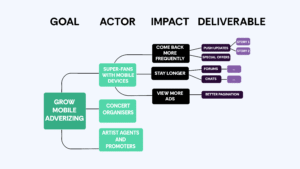
Together they decided to implement a new technique into their requirements management process. The chosen technique was Impact mapping, commonly used to align stakeholders with organizational or project goals and the creation of customer value. In combination with user stories, it is a powerful tool for clearly defining and communicating requirements and unravelling any hidden assumptions.
The consultant created a template to facilitate adoption of the technique, and demonstrated a couple of examples while educating the user on how to make the most out of the impact mapping technique.
When to hire a requirements consultant
Unfortunately, not every company realizes they need requirements consulting until they start facing delays, miscommunication, or costly rework. Some common situations when requirements consultant is most needed include:
Projects where teams are lacking a structured approach to managing requirements
In these situations requirements are often incomplete, poorly-structured as well as difficult to comprehend and track. As a consequence the team has to deal with poor communication with stakeholders and can encounter great difficulties when it comes to designing a consistent solution. Requirements consultants can educate the team about best practices for gathering, documenting, and managing requirements, ensuring long-term improvement. The result? A happy team, and happy stakeholders. 🙂
Teams shifting from Waterfall to Agile
Agile requires a disciplined approach to backlog management, prioritization, and continuous refinement. In cases when the company lacks knowledge or experience with the agile approach, a consultant can educate the team on a whole list of good practices. Just a few examples include: writing effective user stories, defining acceptance criteria and definition of done, implementing feedback and tracking requirements. With this, the consultant can prevent delays and increase the project’s overall success.
Organizations struggling with recurring project failures
Companies who are constantly dealing with costly rework, missed deadlines, or unsuccessful projects are obviously in need of assistance. A consultant can provide help by assessing internal processes, identifying and clearly defining root causes of problems, followed by suggestion of possible solutions. Together with the organization leaders the consultant can help in choosing the most appropriate framework and practices, and participate in the integration of those practices.
Company lacking a clear vision
The company leaders have a highly responsible task of setting the strategic course. Sometimes they struggle with prioritising business needs and making decisions which shape the company’s future. Setting a clear vision is crucial and a requirements consultant can provide his assistance in this case as well. Conducting impact mapping, organizing workshops for creating a vision statement or educating the client about value modelling are just some examples of his possible contribution in this case.
Conclusion
All in all, the goal of a requirements consultant isn’t just to fix problems. Instead, it is to educate organizations and teams how to manage their requirements effectively on their own. Whether through workshops, coaching, or long-term process improvements, their expertise helps businesses build better products, improve collaboration, and reduce project risks – long after the consultant is gone.
If any of the challenges mentioned above seem familiar to you, contact us to see how requirements consulting can help you solve your business challenges.


